
Beyond Cosmetic
Jenna Pothier on Looking Beneath the Surface
An Interview with Jenna Pothier
By Sarah Downey

Jenna Pothier expected to leave her minor cosmetic procedure with a small scar and one less thing to think about. Instead, two weeks later, she got a phone call that changed everything.
“It was completely out of the blue,” she said. “I wasn’t expecting anything like that.”
At 23, and about to begin her final year at Bryant University, Pothier learned that the small bump on her forehead—something doctors had long dismissed as harmless—was dermatofibrosarcoma protuberans (DFSP), a rare form of skin cancer.
The plastic surgeon’s call came while she was on spring break, visiting a friend in Charleston, South Carolina. A plane ride away from her family, Pothier was left with little explanation and no clear next step.
“I just remember calling my parents right away,” she said. “We were all in shock.”
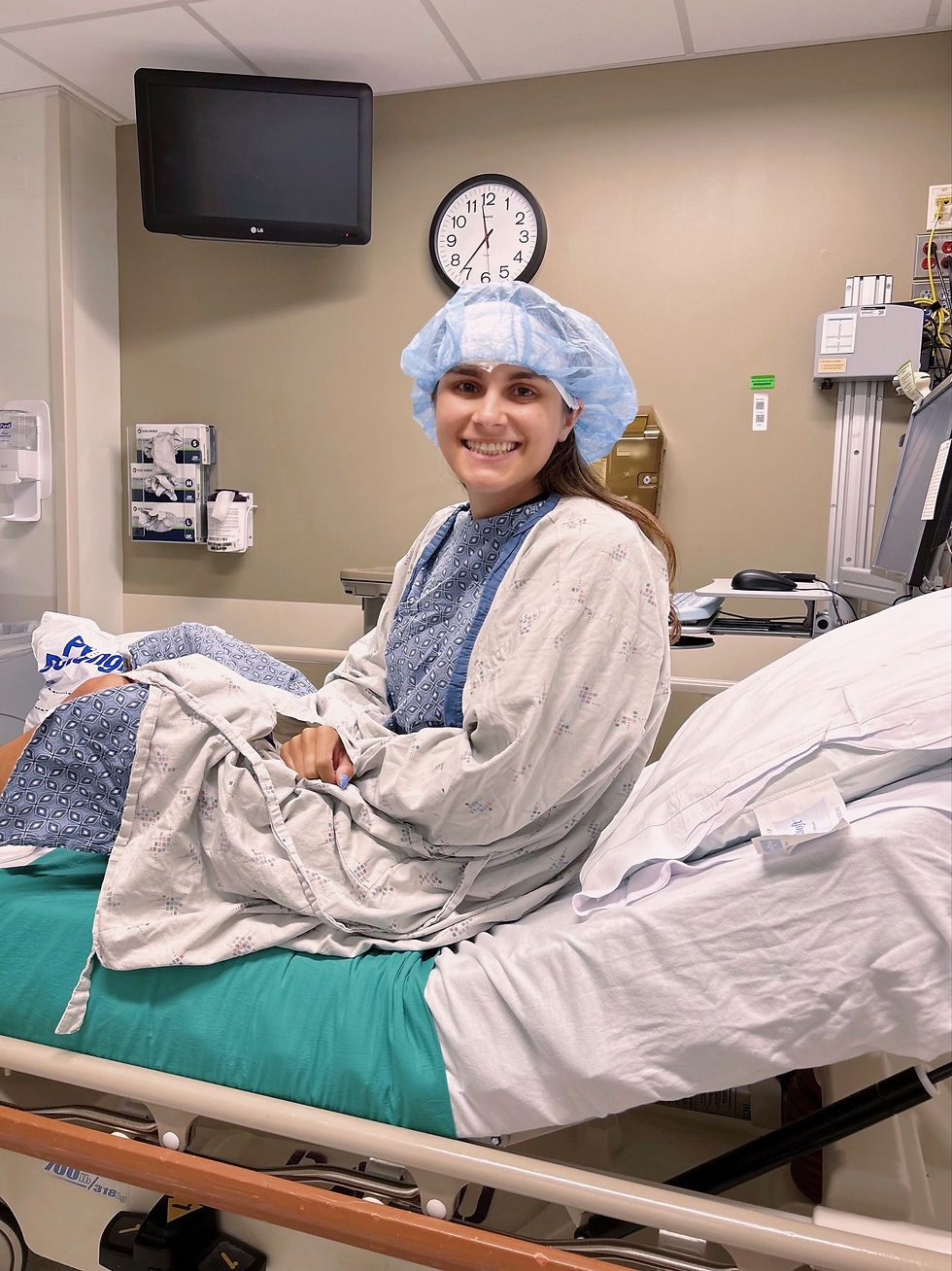
Pothier, who grew up in Foxborough, Massachusetts, quickly sought care at Massachusetts General Hospital. What was initially expected to be a single surgery became three procedures over two months before doctors were able to confirm clear margins.
Reconstructive surgery followed in August, using a newer technique that applies a processed layer of the patient’s own skin to promote healing. Pothier described the technique as “spray-on skin.” She was the first patient at the hospital to undergo the procedure for this type of case.
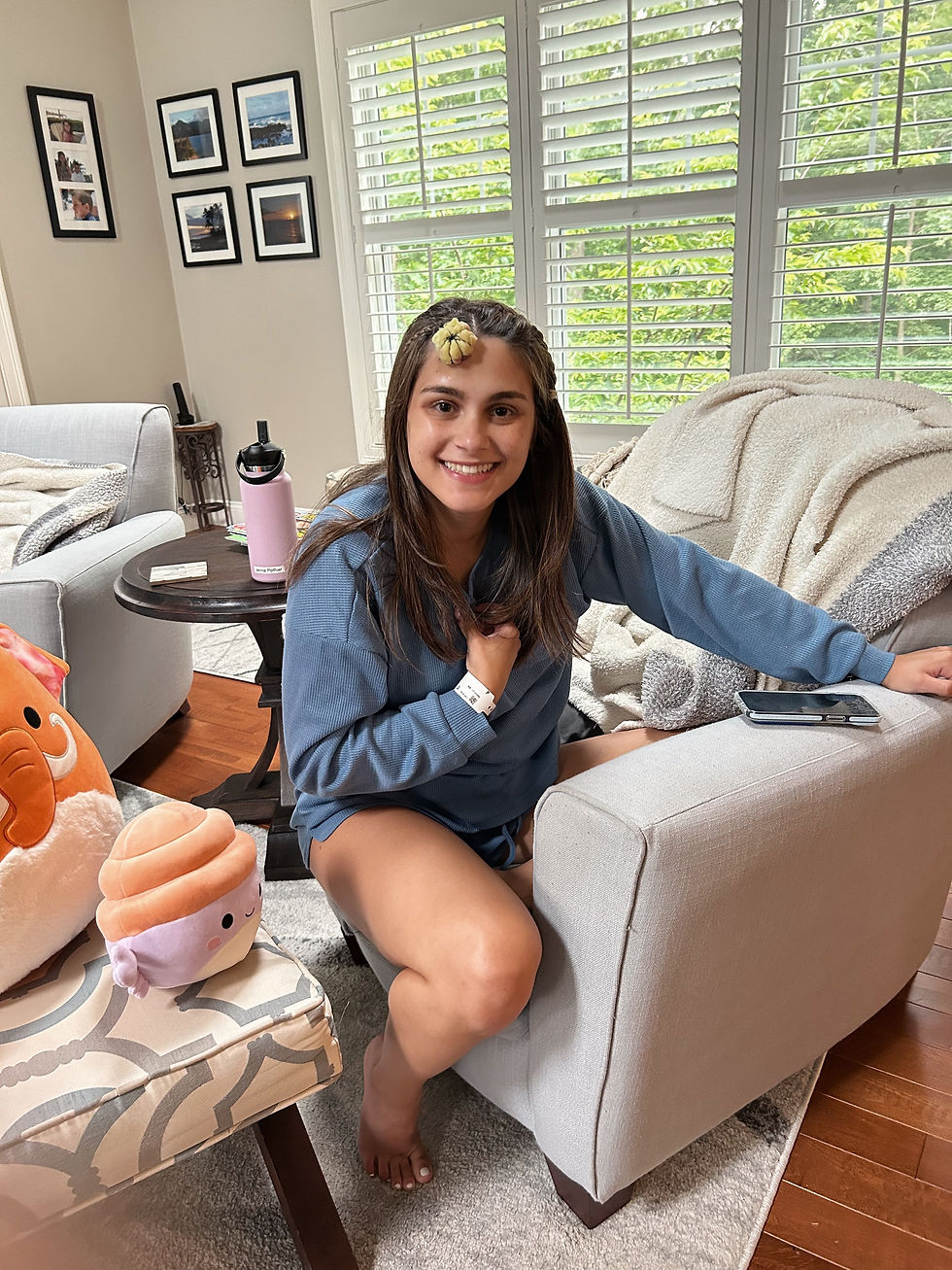
Recovery was long and, at times, isolating. She lived with an open wound on her forehead that did not fully close until January. She cared for the wound daily, changing dressings and wearing headbands and wraps to cover the medical bandages.
“I just did what I had to do,” she said.
Beyond the physical toll, the diagnosis brought a different kind of challenge. At 23—on the cusp of finishing college and entering adulthood—Pothier was navigating a rare cancer with limited information and few visible peers.
“It was a lot all at once,” she said. “It was cancer, it was rare, and I didn’t really know what it meant for my future.”
As her treatment plan became clearer, Pothier said she began to regain a sense of control. Her family and friends played a critical role throughout her recovery. Her parents helped her navigate appointments and procedures, while others showed their support through visits, care packages, notes, and flowers.
“I had a great support system,” she said. “That made a huge difference.”
Still, the rarity of DFSP made it difficult to find others who understood what she was experiencing. Looking for connection, Pothier turned to TikTok, where she began sharing her experience. At first, she said, the videos were cathartic—a way to process her diagnosis. Over time, she realized how few people were talking about the disease and began using the platform to raise awareness and connect with others.
“Even hearing from one person who understood what I was going through meant a lot,” she said.
That connection helped ease some of the isolation she felt early in her diagnosis.
As her body healed, Pothier also faced the emotional challenge of adjusting to visible changes in her appearance. She began taking weekly photos of her forehead, documenting changes that were often too subtle to notice day to day. Over time, the images helped her see how much the wound was improving.
“There are days I don’t notice it as much,” she said. “And days when I still do.”
Over time, the experience shifted how she relates to others, especially those facing challenges that aren’t immediately visible.
“You never really know what someone else is dealing with,” she said.
That perspective now guides her work. After graduating from Bryant University, Pothier pursued a master’s degree in social work at Boston College and now works as a school social worker, supporting students through their own challenges.
Today, she encourages others to trust their instincts and advocate for themselves, especially when something doesn’t feel right.
“If something feels off, keep pushing,” she said. “You know your body better than anyone.”
For young adults facing rare diagnoses, Pothier’s experience highlights a reality that isn’t always visible: cancer doesn’t follow a timeline, and it doesn’t always look the way people expect.
But neither does resilience.
During her recovery, Pothier leaned into what felt familiar, such as reading, watching television, and spending time outdoors with the people closest to her. She also credited therapy as an important part of her healing process, helping her navigate both the uncertainty of her diagnosis and the emotional toll of recovery.
What began as a routine dermatology appointment became something far more complicated. Now, it continues to shape how Pothier moves through the world—with a deeper sense of empathy, a commitment to sarcoma advocacy, and a willingness to speak openly about an experience many young adults continue to face in silence.
What is DFSP?
Dermatofibrosarcoma protuberans (DFSP) is a rare, slow-growing form of soft tissue sarcoma that develops in the skin’s deeper layers. It often appears as a small, painless bump and can be mistaken for a benign condition, which may delay diagnosis. While it rarely spreads to other parts of the body, DFSP can be locally aggressive, requiring precise surgical removal to prevent recurrence.


Abby Brockway, a recent college graduate of Providence College (‘24) from Shrewsbury, NJ, has more than just her 23rd birthday to celebrate this month...

Marcella Ribeiro Santana is a twenty-four year old systems analyst, who lives in Sao Paulo, Brazil with her husband and dog...